Sunday, 26 April 2009

Simulacra


Reading around the subject of semiotics the discussion of course turns to signs and symbols and before long you get involved with trying to comprehend simulacra. A definition from the web suggests:

SIMULACRUM (simulacra): Something that replaces reality with its representation. Jean Baudrillard in "The Precession of Simulacra" defines this term as follows: "Simulation is no longer that of a territory, a referential being, or a substance. It is the generation by models of a real without origin or reality: a hyperreal.... It is no longer a question of imitation, nor duplication, nor even parody. It is a question of substituting the signs of the real for the real" (1-2). His primary examples are psychosomatic illness, Disneyland, and Watergate. Fredric Jameson provides a similar definition: the simulacrum's "peculiar function lies in what Sartre would have called the derealization of the whole surrounding world of everyday reality" (34).


The trouble with this territory is the lack of input of the idea of thinking and the part it plays in the whole relationship of percept and concept. Fascinating to read Rudolph Steiner's "The Science of Knowing - Outline of an Epistemology Implicit in the Goethean World View" (1886). In a section on "Thinking & Perception" he writes:

"We are used to seeing the world of concepts as empty and without content, and so used to contrasting perception with it as something full of content and altogether definite, that it will be difficult to establish for the world of concepts the position it deserves in the true scheme of things. We miss the fact entirely that mere looking is the emptiest thing imaginable, and that only from thinking does it first receive any content at all. The only thing true about the above view is that looking does hold the ever-fluid thought in one particular form, without our having to work along actively with this holding. The fact that a person with a rich soul life sees a thousand things that are a blank to someone spiritually poor proves, clear as day, that the content of reality is only the mirror-image of the content of our spirit and that we receive only the empty form from outside. We must, to be sure, have the strength in us to recognize ourselves as the begetters(Erzeuger) of this content; otherwise we see only the mirror image and never our spirit, that is mirrored. Even a person who sees himself in a real mirror must in fact know himself as a personality in order to know himself again in this image. " (pp57)


Now was there ever a gauntlet thrown down to ask us to break free of dualism? I would suggest this is the nub of the emergence of the internet where people are beginning to actually take hold of themselves, their thinking and their actions. (Thinking, feeling and willing!). A new responsibility based out of an awareness of the spirit of thinking.

Sunday, 19 April 2009

Evocation


Here's a chance to take off on a road that has been apparent for some time but needed the words to articulate the experience: to evoke. When viewing a picture by Jane I felt that the picture portrayed something deeper than the picture at face value represented. The word that came to mind was it evoked something deeper. Now how do you capture the essence of evocation which is also defined as to "call forth"? Plenty of options to follow up here and no doubt will create a rich source of new entries on this blog - now all you philosophers out there have probably already been trained in this narrative but for me it is a pleasure to "face-up" to this essence of experience and to pin it down - if ever that was possible. More the opportunity to experience the oppositions of salt, mercury and sulphur - is evocation capturing that balance of mercury?

Anyhow Jasper Morrison says that "Haptic means to make the senses drool...." (Designing Design pp 80) The senses drool - something has been evoked.

What more is out there?

Saturday, 28 February 2009

Palladio


Going on the hunt for some understanding of design - see the roundabout debate - the trip has found me watching and reading about Andrea Palladio and Palladianism. A recent programme on the BBC distilled the story quite well for a layman. Discussion went on to the Vitruvian Man and questions of symmetry and proportion. The latin basis being the three principles of: "firmitas"(strong), "utilitas" (useful) and "venustas" (beautiful). What a great triumverate to hold on to when critically appraising any design work. Robert Adam, the architect, discussed the "poetry of the rulebook" and said that, "...without rules you lose yourself in the labrinyth." Ah....the abyss by another name?

Wednesday, 11 February 2009

Estonian cyber wargames hit the streets?


Travelling out of Heathrow on Tuesday I came across a large group of Estonian soldiers in combat fatigues. I know the Estonian's are very much up to speed with all things digital but hey! a fashion statement whereby soldiers clothing mimics a digital pattern? Is this virtual reality taking over reality? Is the designer having a laugh? Apparently not according to Wikipedia here and here - this opens up a hole can of worms or anorak stuff if you are not careful!!! What would Zizek say?

Friday, 6 February 2009

The Mystique of Purity


Back to the sense of roundabout symbolism. What is that powerful draw, that essence that is sought in the perfection of design? Has Poggioli at last provided a clue....

“… this does not mean that the iconoclastic attitude can always be reduced to a vulgar gesture of protest or a brutal act of vandalism. Its more profound root is sometimes the quasi-religious aspiration toward and absolute emotional and mental freedom, the desire to reacquire an ingenuousness and innocence of vision which modern man seems forever to have lost, the anxious will to discover the eternal laws of ideal or perfect form. There is no doubt that it was an aspiration or will of this type which led Picabia to display, as if it were a painting, an empty frame, hung in mid-air; this let Kandinsky’s famous revelation, when he became convinced that his true work of art, creative and not imitative, was what had appeared for the first time to his eyes when he beheld one of his own traditional canvases put, by chance, back to. Such examples demonstrate that iconoclasm can come to be seen as the negative moment of a tendency elsewhere discussed as the mystique of purity.”

The Theory of the Avant-garde
Renato Poggioli (1962) pp 181

Thursday, 1 January 2009

Craftsmanship for 2009


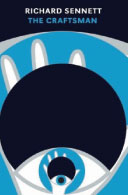
Richard Sennett's 2008 book "The Craftsman" is an excellent read not only for the question of craft but also for the most basic existential questions we face today.

He posits three basic abilities as the foundation of craftsmanship:


to localise - making a matter concrete;

to question - reflecting on its qualities;

and

to open up - expanding its sense.

Now if ever there was a basic structure to improve marketing that must be it. The task for 2009!!

Tuesday, 16 December 2008

The Space of flows


In The Rise of the Network Society Castell's reports on the cancelling of the proposed World City Fair in Tokyo in 1997 when a Japanese TV comedian got elected as mayor on the sole issue of stoppping its construction.

For Castell's, "The local logic of civil society was catching up with, and contradicting, the global logic of international business."

He continues, "Thus, people do still live in places. But because function and power in our societies are organized in the space of flows, the structural domination of its logic essentially alters the meaning and dynamic of places. Experience, by being related to places, becomes abstracted from power, and meaning is increasingly separated from knowledge. There follows a structural schizophrenia between two spatial logics that threatens to break down communication channels in society. The dominant tendency toward a horizon of networked, ahistorical space of flows, aiming at imposing its logic over scattered, segmented places, increasingly unrelated to each other, less and less able to share cultural codes. Unless cultural, political, and physical bridges are deliberately built between these two forms of space, we may be heading toward life in parallel universes whose times cannot meet because they are warped into different dimensions of a social hyperspace." 458-459

Basically consciousness raising. And what does that entail? Harvey at the end of his book on Post-Modernity quotes Poggioli,

"...the present is valid only by virtue of the potentialities of the future, as the matrix of the future, insofar as it is the forge of history in continued metamorphosis, seen as a permanent spiritual revolution."
(R.Poggioli The Theory of the avant-garde 1968 pp73)

Spiritual revolution : consciousness : awareness